
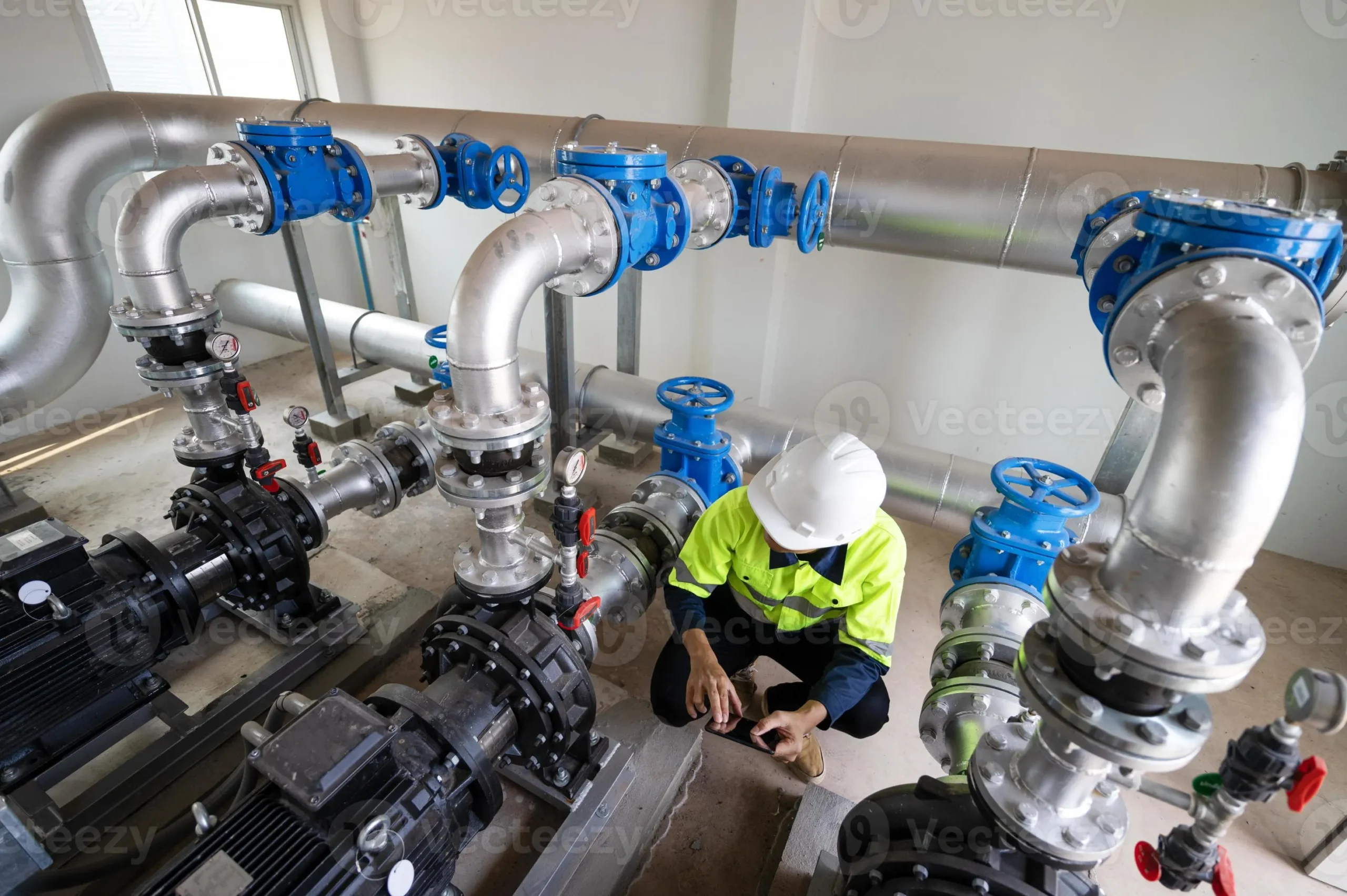
Every successful plumbing, mechanical, or industrial project in Texas begins long before the first pipe is cut. It begins with a number, and that number comes from a piping estimate. Whether a contractor is bidding on a hospital in Houston, a distribution warehouse in Dallas County, or a residential subdivision in Williamson County, the accuracy of the piping takeoff decides whether the job earns a profit or bleeds money from day one.
Understanding how piping estimates are calculated: length, diameter, and fittings is essential for general contractors, mechanical subcontractors, plumbers, project managers, and even property developers who review bids. In this detailed guide, we break down the elements of a piping takeoff step by step, explain how estimators measure and price each component, and show why these calculations matter so much in the fast-growing Texas construction market.
What Is a Piping Estimate?
A piping estimate is a detailed calculation of all the materials, labor, and equipment required to install a piping system on a construction project. It covers everything from underground sanitary lines and domestic water piping to chilled water systems, natural gas lines, medical gas piping, and industrial process piping.
The foundation of every piping estimate is the piping takeoff, sometimes called a plumbing takeoff or mechanical takeoff. During the takeoff, an estimator reads the construction drawings and specifications, then measures and counts every element of the piping system. The three core elements that drive the numbers are pipe length, pipe diameter, and pipe fittings. Get any one of these wrong, and the entire construction cost estimate falls apart.
In Texas, where commercial construction is booming in cities like Austin, San Antonio, Fort Worth, and El Paso, competition on bids is intense. A contractor in Travis County or Bexar County who submits a bid based on a sloppy takeoff will either lose the job by pricing too high or win a losing job by pricing too low. That is why accurate quantity takeoff services have become such a critical part of preconstruction planning across the state.
Breaking Down the Elements of a Piping Takeoff
A complete piping takeoff is more than a simple pipe count. Professional estimators break the system into measurable components and quantify each one. Below are the primary elements of a piping takeoff and how each one is calculated.
1. Pipe Length (Linear Footage)
The first and most fundamental measurement in any piping estimate is linear footage, which is the total running length of pipe required for the project. Estimators calculate pipe length by scaling the plumbing and mechanical drawings, tracing every horizontal run on the floor plans and every vertical riser on the riser diagrams and sections.
Here is how pipe length is typically calculated during a takeoff:
- Horizontal runs: Measured directly from the floor plans using the drawing scale, or digitally using on-screen takeoff software that traces each pipe route and totals the linear feet automatically.
- Vertical risers and drops: Calculated from floor-to-floor heights, ceiling heights, and riser diagrams. A pipe that drops from a ceiling at 14 feet down to a fixture at 3 feet adds 11 feet of vertical pipe that never appears on a flat floor plan.
- Underground piping: Measured from site utility plans, including burial depth, slope for gravity drainage lines, and stub-ups through the slab.
- Waste and vent systems: Sanitary lines require slope (commonly 1/4 inch per foot in Texas plumbing codes for smaller diameters), which slightly increases true pipe length over the plan measurement.
Once the raw linear footage is measured, estimators apply a waste factor, usually 5% to 10%, to account for cutting losses, offsets, and field adjustments. Pipe is sold in standard stick lengths (often 20-foot or 21-foot lengths), so the final material order is rounded up to full sticks. On a large project such as a multifamily complex in Harris County or a school in Collin County, an overlooked waste factor can mean thousands of dollars in unplanned material costs.
2. Pipe Diameter (Pipe Sizing)
Length tells you how much pipe you need; diameter tells you how much that pipe will cost. Pipe diameter, expressed as nominal pipe size (NPS), has an enormous impact on both material pricing and labor hours. A linear foot of 1/2-inch copper is a completely different cost item than a linear foot of 8-inch ductile iron or 12-inch carbon steel.
During the takeoff, the estimator separates every measured length by size and by material type. A typical breakdown on a commercial project might include:
- 1/2-inch to 2-inch domestic water piping in copper Type L or PEX
- 2-inch to 6-inch sanitary waste and vent piping in PVC or cast iron
- 2-1/2-inch to 10-inch chilled water and heating hot water piping in carbon steel
- Specialty lines such as medical gas copper, stainless steel process piping, or gas piping in black steel
Why does diameter matter so much in the calculation? Three reasons drive the math:
- Material cost scales with size: Larger diameter pipe uses more raw material, and prices rise steeply as sizes increase. Pipe wall thickness (schedule), such as Schedule 40 or Schedule 80, also changes the price per foot.
- Labor hours scale with size: Industry labor units, such as those published by MCAA (Mechanical Contractors Association of America) and PHCC, assign more installation hours per foot to larger pipe. Hanging, joining, and testing an 8-inch welded steel line takes far longer than gluing 2-inch PVC.
- Supports and accessories scale with size: Hanger spacing, insulation thickness, and valve costs all depend on pipe diameter. Insulation for a 6-inch chilled water line in a humid climate like Houston or Galveston County must also account for condensation control, which adds cost.
This is why a proper piping cost breakdown never reports a single total of linear feet. It reports linear feet by size, by material, and by system, because that is the only format that produces a defensible price.
3. Pipe Fittings (Elbows, Tees, Couplings, and More)
Fittings are where inexperienced estimators lose the most money. Every change of direction, every branch, every transition in size requires a fitting, and each fitting carries both a material cost and a labor cost. On many systems, the labor to install fittings exceeds the labor to install the straight pipe itself.
A thorough fitting takeoff counts items such as:
- Elbows (90-degree and 45-degree): Counted at every change of direction shown on plans, risers, and isometric drawings.
- Tees and wyes: Counted at every branch connection where a line splits to serve fixtures or equipment.
- Couplings and unions: Calculated based on stick lengths of pipe and locations where future disconnection is required.
- Reducers and bushings: Counted wherever the pipe transitions between diameters.
- Flanges, gaskets, and bolt kits: Common on larger steel and industrial piping systems and at equipment connections.
- Valves and specialties: Gate valves, ball valves, check valves, balancing valves, backflow preventers, cleanouts, and water hammer arrestors are counted individually because each carries a significant unit price.
Estimators often use joint counts to convert fittings into labor. Each fitting type and size has a known number of joints, and each joint (soldered, glued, threaded, grooved, pressed, or welded) has a standard labor unit. For example, a 4-inch welded elbow has two welded joints, and each weld carries a labor value based on pipe size and schedule. Multiply the joint count by the labor unit, and you get the field hours needed to install the fittings.
As a rule of thumb, fittings can add 20% to 50% on top of the straight pipe material cost depending on the complexity of the layout. Congested mechanical rooms, like those found in high-rise projects in downtown Dallas or the Texas Medical Center in Houston, push the fitting ratio even higher because the piping must weave around structure, ductwork, and equipment.
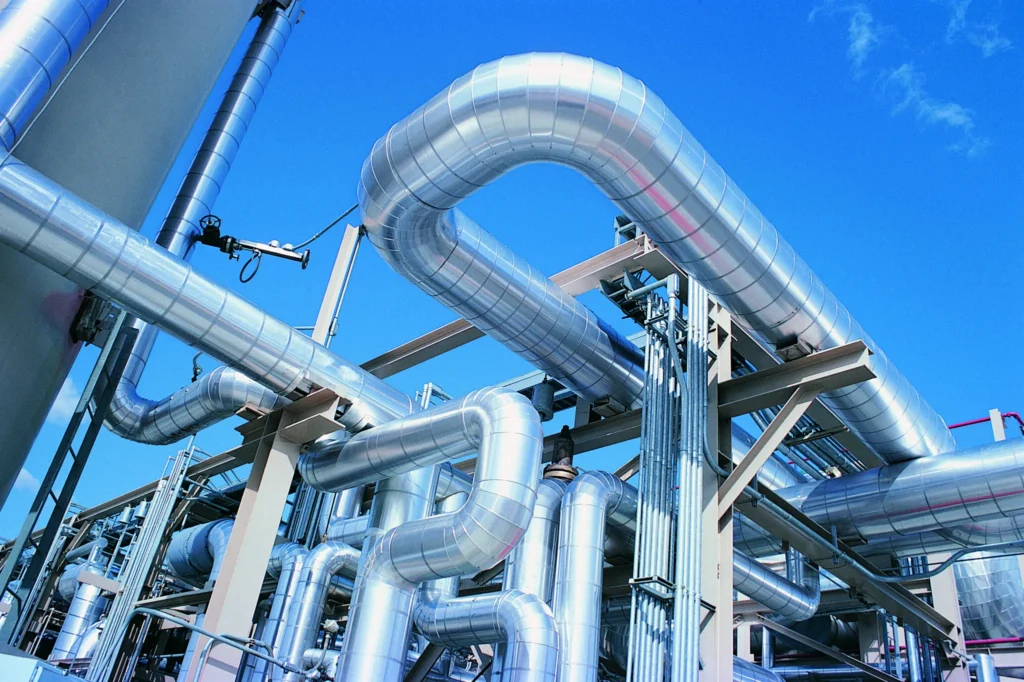
Other Components Counted in a Complete Piping Takeoff
While length, diameter, and fittings form the core of the calculation, a professional piping estimate also quantifies the supporting items that turn raw pipe into a working system:
- Pipe hangers and supports: Clevis hangers, trapeze supports, riser clamps, and seismic bracing, spaced per code and pipe size.
- Pipe insulation: Measured in linear feet by pipe size and insulation thickness, with fitting covers counted separately.
- Excavation and backfill: For underground utilities, trenching quantities are calculated from pipe depth, trench width, and soil conditions, a major factor in the expansive clay soils common across North Texas and Central Texas.
- Sleeves, firestopping, and wall penetrations: Counted at every rated wall and floor penetration.
- Testing, flushing, and disinfection: Pressure testing and chlorination of domestic water systems, often priced per system or per fixture.
- Equipment connections: Final connections to water heaters, pumps, boilers, chillers, and fixtures.
From Takeoff to Final Price | How the Numbers Come Together?
Once the quantity takeoff is complete, the estimator converts quantities into dollars through a structured pricing process:
- Step 1 – Material pricing: Each line item (pipe by size, fittings by type and size, valves, hangers, insulation) is priced using current supplier quotes or industry databases. Material prices for copper, steel, and PVC fluctuate, so Texas estimators track market pricing closely.
- Step 2 – Labor calculation: Quantities are multiplied by labor units to produce total man-hours, then multiplied by the local labor rate. Labor rates vary across Texas; crews in Austin and Travis County often command different wages than crews in Lubbock, Amarillo, or the Rio Grande Valley.
- Step 3 – Equipment and indirect costs: Lifts, welding machines, trenchers, scaffolding, project supervision, and mobilization are added.
- Step 4 – Overhead and profit: The contractor applies markup to cover business overhead and target margin.
- Step 5 – Bid review: The estimate is checked against benchmarks such as cost per fixture, cost per square foot, or cost per ton of cooling to confirm the numbers are reasonable before the bid is submitted.
Why Accurate Piping Takeoffs Matter in the Texas Construction Market
Texas is one of the most active construction markets in the United States. Data centers are rising in Ellis County and Denton County, petrochemical and industrial piping work continues along the Gulf Coast in Jefferson County and Brazoria County, healthcare and commercial projects are expanding in Tarrant County and Bexar County, and residential growth keeps pushing outward through Fort Bend County, Montgomery County, Hays County, and Hidalgo County.
In a market this competitive, bid accuracy is survival. An accurate piping takeoff protects contractors in several ways:
- It prevents underbidding, which leads to losses, change-order battles, and damaged reputations.
- It prevents overbidding, which costs contractors winnable projects in competitive Texas bid markets.
- It supports better material procurement, reducing waste and jobsite storage problems.
- It creates a clear baseline for project management, scheduling, and cost control during construction.
- It strengthens negotiations with suppliers and subcontractors because every quantity is documented.
Whether the project is a restaurant build-out in McKinney, a warehouse in Laredo, an apartment complex in Corpus Christi, or a school addition in Waco, the estimating principles remain the same: measure the length, separate by diameter, count every fitting, and price with current local data.
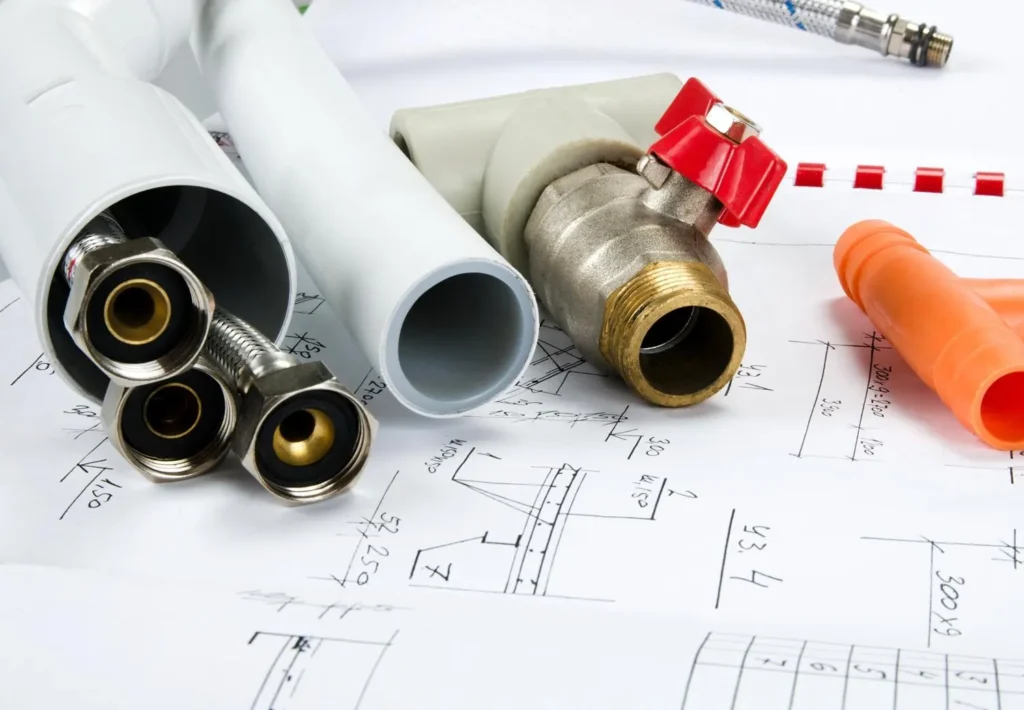
Common Mistakes to Avoid in Piping Estimates
- Ignoring vertical pipe: Risers and drops are invisible on floor plans and frequently missed by beginners.
- Forgetting the waste factor: Ordering exact plan quantities guarantees a shortage in the field.
- Undercounting fittings: Every offset around a beam or duct adds elbows that may not appear on the drawings.
- Mixing pipe materials: Copper, PVC, CPVC, PEX, cast iron, and steel each carry different costs and labor units and must be kept separate.
- Using outdated pricing: Material markets move quickly; last year’s copper price will not hold on next month’s bid.
- Skipping specification review: The specs, not just the drawings, dictate pipe schedules, joining methods, insulation requirements, and testing procedures.
Get Professional Piping Takeoff Services Across Texas
If you want winning bids without spending late nights measuring drawings, Texas Estimate is here to help. We provide fast, accurate, and affordable piping estimates and complete quantity takeoff services for plumbing, mechanical, HVAC, and industrial piping projects throughout Texas, from Houston, Dallas, Austin, San Antonio, and Fort Worth to every county in between, including Harris, Dallas, Tarrant, Bexar, Travis, Collin, Denton, El Paso, Fort Bend, and Montgomery. Our experienced estimators deliver detailed pipe length, diameter, and fitting breakdowns with current Texas material pricing and local labor rates, so you can bid with confidence and win more profitable work. Contact Texas Estimate today for a quote on your next piping takeoff and let our team turn your drawings into a bid-ready estimate.