
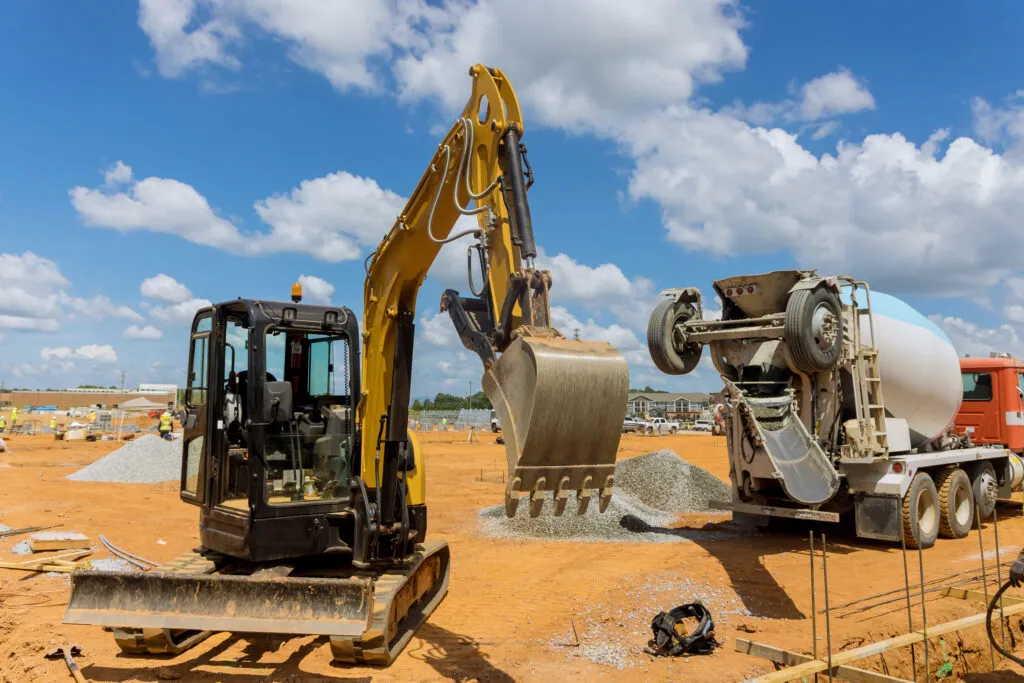
Anyone who has ever put together a construction estimate in Texas knows that equipment is one of the trickiest cost categories to get right. Materials come with supplier quotes, and labor comes with wage rates, but heavy equipment costs are a moving target shaped by machine rates, fuel consumption, operator wages, maintenance schedules, and even the distance a lowboy trailer has to haul an excavator from a yard in Harris County to a job site in Montgomery County. Understanding how equipment costs are factored into construction estimates is essential for contractors, developers, and project owners across Texas, whether the work is a highway expansion in Dallas County, a subdivision in Williamson County, or a refinery turnaround along the Gulf Coast near Corpus Christi.
This guide breaks down the three major components of equipment costing, machine rates, fuel, and operator costs, and explains how professional estimators convert them into a single hourly or unit price. It also covers the supporting costs that beginners often miss, such as mobilization, standby time, insurance, and depreciation, and looks at how conditions in different regions of Texas, from the Panhandle to the Rio Grande Valley, change the math.
Why Equipment Costs Matter So Much in Construction Estimating?
On heavy civil and sitework projects, equipment can represent 25 to 40 percent of total project cost, and on earthmoving-intensive jobs it can climb even higher. A single miscalculated machine rate, repeated across thousands of operating hours, can quietly erase an entire profit margin. That is why construction cost estimating treats equipment as its own cost category, separate from labor and materials, with its own logic and its own data sources.
Texas amplifies the stakes. The state’s sheer size means haul distances are longer, its climate ranges from humid Gulf Coast conditions in Galveston County to arid West Texas heat in Ector and Midland Counties, and its construction boom in metro areas like Austin (Travis County), Dallas-Fort Worth (Dallas, Tarrant, Collin, and Denton Counties), Houston (Harris and Fort Bend Counties), and San Antonio (Bexar County) keeps equipment demand and rental rates elevated. An estimator who ignores these regional realities will produce numbers that look fine on paper but fail in the field.
Machine Rates (Ownership and Operating Costs)
The foundation of equipment estimating is the machine rate, sometimes called the equipment cost per hour. It answers a simple question: what does it really cost to have this machine working on the project for one hour? Machine rates are built from two buckets, ownership costs and operating costs.
Ownership Costs
Ownership costs exist whether the machine moves a single yard of dirt or sits parked in a laydown yard in Lubbock. They include:
- Depreciation: the loss in the machine’s value over its useful life. A new excavator purchased for $350,000 with a 10,000-hour useful life and a $70,000 salvage value carries $28 per hour in depreciation alone. Equipment depreciation is usually the single largest ownership cost.
- Interest or cost of capital: the financing cost of the money tied up in the machine, whether it was purchased with a loan or with company cash that could have earned a return elsewhere.
- Insurance and taxes: equipment insurance premiums, property taxes, and licensing fees, which vary by county appraisal practices across Texas.
- Storage and overhead: yard space, security, and the administrative burden of managing a fleet.
Operating Costs
Operating costs occur only when the machine runs, and they scale with hours of use:
- Fuel: covered in depth in the next section, and often the most volatile operating cost.
- Maintenance and repair costs: filters, fluids, undercarriage wear, hydraulic hoses, and scheduled service. Estimators commonly express repair costs as a percentage of depreciation, ranging from 50 percent for light-duty use to over 100 percent for severe applications like rock excavation in the Texas Hill Country around Hays and Comal Counties, where limestone chews through ground-engaging tools.
- Tires or tracks: a major line item for wheel loaders, haul trucks, and scrapers. Abrasive caliche and hot pavement in West Texas shorten tire life noticeably compared to softer coastal soils in Jefferson County.
- Ground-engaging tools and wear parts: bucket teeth, cutting edges, and ripper tips consumed by the work itself.
Owned vs. Rented Equipment Rates
Not every contractor owns a full fleet. For rented machines, the estimator replaces the ownership calculation with heavy equipment rental rates from suppliers, typically quoted daily, weekly, or monthly, and then adds fuel, operator, and delivery charges on top. In high-demand markets like Austin and Dallas-Fort Worth, rental availability can tighten during peak season, pushing rates up 10 to 20 percent. Smart estimators in Texas check current local rental quotes for each bid rather than relying on last year’s numbers, because a dozer that rented for $8,500 a month in El Paso County may cost meaningfully more in booming Collin County.
The Hidden Multiplier
A machine rate is only accurate if the assumed equipment utilization rate matches reality. If ownership costs are spread over 1,800 working hours per year but the machine actually works only 1,200 hours, the true hourly cost is 50 percent higher than estimated. Weather plays a role here: hurricane-season rain delays along the Gulf Coast in Brazoria and Galveston Counties, or spring storms in North Texas, reduce productive hours and effectively raise the cost of every hour the machine does work. Experienced estimators build realistic utilization assumptions and weather contingencies into their production rates.

Fuel Costs in Construction Estimates
Fuel is the operating cost that owners feel every single day, and it deserves its own careful treatment in any estimate. Fuel consumption in construction equipment depends on three variables: engine size, load factor, and hours of operation.
How Estimators Calculate Fuel Burn
The standard approach multiplies the engine’s rated horsepower by a fuel consumption factor and a load factor. A 300-horsepower dozer working at a moderate load factor might burn 10 to 14 gallons of diesel per hour, while the same machine ripping compacted material at high load could burn 18 gallons or more. Multiply that by the local price of off-road (dyed) diesel and by the estimated machine hours from the quantity takeoff, and you have the fuel line item.
Load factor is where judgment matters. An excavator digging free-flowing sandy loam in the Rio Grande Valley near Hidalgo County works far easier than one breaking out weathered rock on a hillside project in Bell or Burnet County. Estimators adjust load factors for soil conditions, haul grades, and the nature of the task, and those adjustments can swing fuel costs by 30 percent or more.
Fuel Price Volatility and Texas Logistics
Diesel prices fluctuate with crude oil markets, and while Texas benefits from proximity to Gulf Coast refineries, delivered fuel prices still vary by region. Remote sites in the Permian Basin around Midland and Odessa or in the Panhandle near Amarillo (Potter and Randall Counties) may pay a premium for fuel delivery to on-site tanks. Long-duration projects should carry a fuel escalation allowance or contract-level fuel adjustment clause, because a 50-cent-per-gallon swing on a job burning 2,000 gallons a week changes the budget by over $50,000 a year.
Estimators also include the cost of fuel handling itself: on-site fuel storage tanks, fuel trucks and drivers for nightly refueling rounds, spill containment, and diesel exhaust fluid (DEF) for modern Tier 4 engines. On a spread-out highway job in rural Hill County or a wind-farm site in Nolan County, the fuel truck route alone can add measurable daily cost.
Operator Costs
A machine without an operator produces nothing, so operator costs are estimated hand-in-hand with machine hours. The key concept is the fully burdened labor rate, which is always higher than the wage on the paycheck.
Building the Burdened Operator Rate
A fully burdened operator rate starts with the base hourly wage and adds:
- Payroll taxes: FICA, federal and state unemployment taxes.
- Workers’ compensation insurance: rated by trade classification, and meaningful for heavy equipment operators.
- Benefits: health insurance, retirement contributions, paid time off, and per diem or lodging for travel work.
- Overtime premiums: common on schedule-driven Texas projects where crews run 50- to 60-hour weeks to beat summer heat or contract milestones.
A base wage of $28 per hour can easily become a burdened cost of $40 to $45 per hour once these items are included. On public work, prevailing wage requirements under the Texas Government Code or federal Davis-Bacon rules on federally funded projects set minimum wage rates by county, so an estimator bidding a TxDOT project in Travis County must use the published wage decision for that locality, not a company-wide average.
Regional Labor Markets Across Texas
Operator wages vary across the state with local demand. Metro markets such as Houston, Dallas, Fort Worth, Austin, and San Antonio compete intensely for skilled crane, excavator, and paving machine operators, while energy-sector activity in the Permian Basin periodically pulls operators away from construction with higher oilfield pay, tightening supply in West Texas counties like Ector, Midland, and Reeves. Border-region projects in El Paso County or Cameron County in the Rio Grande Valley operate in yet another distinct labor market. Estimators who apply one statewide wage assumption to every job will be too high in some counties and dangerously low in others.
Operator productivity matters as much as wage. A seasoned operator can move 15 to 25 percent more material per hour than a novice, which lowers the effective cost per cubic yard even at a higher wage. Good estimates pair realistic production rates with realistic crews.
Putting It All Together
Once the estimator has the machine rate, fuel cost, and burdened operator cost, the three combine into a total hourly cost for each piece of equipment. From there, the process looks like this:
- 1. Quantity takeoff: measure the work, cubic yards of excavation, tons of base material, square yards of paving, from the plans.
- 2. Production rates: estimate how much work the chosen crew and equipment spread can accomplish per hour under the site’s actual conditions, soil type, haul distance, weather season, and traffic constraints.
- 3. Machine hours: divide quantities by production rates to get required equipment hours for each activity.
- 4. Extend the costs: multiply machine hours by the combined hourly rate (ownership + operating + fuel + operator) to price each activity.
- 5. Add equipment-related indirects: mobilization and demobilization costs, standby time, small tools, and support equipment such as water trucks, fuel trucks, and service vehicles.
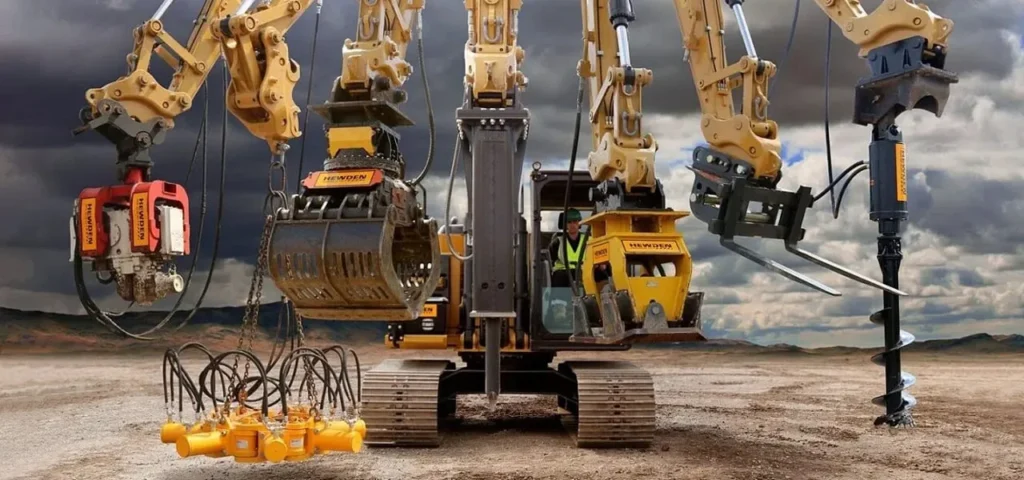
Mobilization and Demobilization
Moving heavy iron is expensive. Hauling a 45-ton excavator requires permitted loads and specialized trailers, and Texas distances make this a bigger line item than in smaller states. Mobilizing a fleet from a contractor’s yard in Fort Worth to a project in Lubbock County, roughly 300 miles, can cost thousands of dollars per machine each way. Estimates itemize mobilization either as a lump sum or per machine, and savvy owners scrutinize this number closely.
Standby and Idle Time
When a machine is on site but not working, waiting on another trade, weather, or owner-caused delays, it still accrues ownership cost. Estimates and contracts often define standby rates (typically the ownership portion of the hourly rate, without fuel and operator) to price this risk. On congested urban projects in downtown Houston or Austin, where staging space is tight and delays ripple quickly, standby exposure is a real consideration.
Contingency and Escalation
Finally, professional estimates carry contingency for equipment breakdowns, fuel price escalation on multi-year work, and rental rate movement. Cost databases and historical job-cost records help calibrate these allowances, but nothing replaces current, local market data from the specific Texas region where the work will be performed.
Common Mistakes When Estimating Equipment Costs
- Using national average rates: generic cost guides rarely reflect actual rental and labor conditions in fast-moving Texas markets like Frisco, McKinney, New Braunfels, or Katy.
- Ignoring load factor: applying full-throttle fuel burn to light work, or light-duty burn to rock ripping, distorts fuel budgets.
- Forgetting support equipment: water trucks for dust control (a constant need in dry Central and West Texas summers), pilot vehicles, and service trucks add real cost.
- Overstating utilization: assuming a machine works every scheduled hour ignores weather, maintenance windows, and sequencing gaps.
- Skipping mobilization math: long hauls between Texas metros and rural counties can turn a competitive unit price into a losing one.
- Mixing owned and rental logic: charging full ownership rates on a machine that is actually rented, or vice versa, double-counts or omits cost.
Frequently Asked Questions
What percentage of a construction estimate is equipment?
It varies by project type. Building construction may see equipment at 5 to 15 percent of cost, while heavy civil, earthwork, and roadway projects in Texas commonly run 25 to 40 percent.
How is the hourly rate of construction equipment calculated?
By adding ownership costs (depreciation, interest, insurance, taxes) to operating costs (fuel, maintenance and repairs, tires, wear parts) and dividing by expected annual operating hours, then adding the burdened operator rate.
Why do equipment costs differ across Texas regions?
Rental supply and demand, fuel delivery logistics, soil and rock conditions, climate-driven wear, haul distances, and county-specific prevailing wages all shift costs between regions such as the DFW Metroplex, Greater Houston, Central Texas, the Gulf Coast, the Panhandle, West Texas, and the Rio Grande Valley.
Get Accurate Construction Estimates Anywhere in Texas
If you want equipment costs, and every other cost category, calculated with real Texas market data instead of guesswork, Texas Estimate is here to help. Our team prepares detailed, bid-ready construction estimates for contractors, subcontractors, developers, and homeowners across the entire state, from Harris, Dallas, Tarrant, Bexar, and Travis Counties to fast-growing communities in Collin, Denton, Fort Bend, Williamson, Montgomery, and Hidalgo Counties. We factor in current machine rates, local fuel pricing, county prevailing wages, mobilization distances, and region-specific site conditions so your bids are competitive and your budgets hold up in the field. Whether you are pricing an earthwork package in Houston, a commercial pad site in Austin, a residential development in San Antonio, or a utility project in El Paso, contact Texas Estimate today for fast, accurate, and affordable construction cost estimating services built for Texas.