

Why Estimate Accuracy Decides Who Wins Work in Texas?
Texas is one of the most active construction markets in the country, with strong demand in Houston, Dallas–Fort Worth, Austin, San Antonio, El Paso, and the Rio Grande Valley. Growth attracts competition, so more bidders chase every project.
An inaccurate estimate hurts you in two ways:
- Bid too high, and you lose work you could have won.
- Bid too low, and you win a job that erodes your profit, strains cash flow, and damages relationships with subs and suppliers.
An accurate estimate sits in the narrow band where you are competitive and profitable. Reaching it consistently is a process, not luck.
What Is an Accurate Construction Estimate?
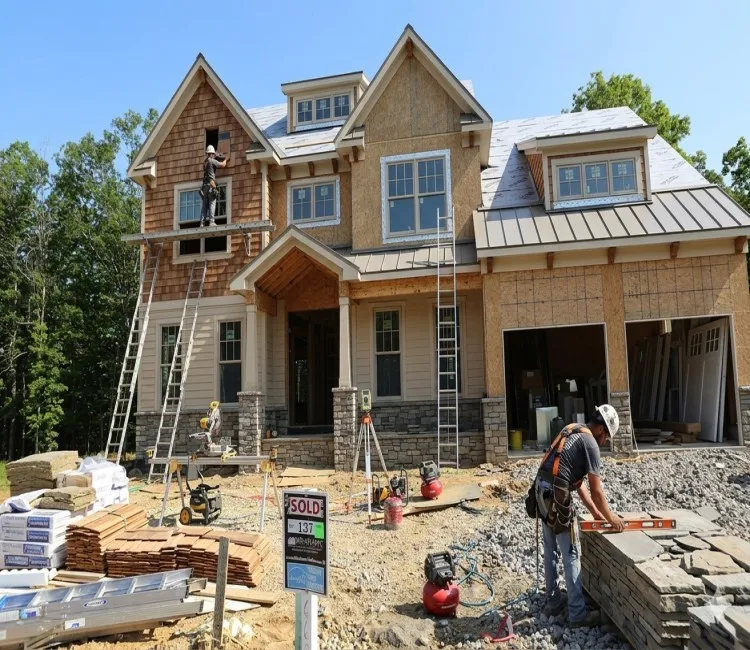
An accurate construction estimate is a detailed forecast of the full cost to build a project: materials, labor, equipment, subcontractors, overhead, profit, and risk. It is built from measured quantities and current local pricing.
Accuracy is not one number. It depends on the project stage:
| Estimate Type | When It’s Used | Typical Basis |
|---|---|---|
| Conceptual / order-of-magnitude | Early feasibility | Cost per square foot, historical data |
| Preliminary / schematic | Design development | Assemblies and allowances |
| Detailed / bid-ready | Final bidding | Full quantity takeoff, quotes, and unit costs |
For competitive bids, the detailed estimate is the one that wins or loses the job.
10 Proven Ways Accurate Estimates Help Texas Contractors Win More Projects
1. Start With a Complete and Precise Quantity Takeoff
The quantity takeoff is the foundation of every estimate. Missed quantities, such as concrete volume, framing lumber, roofing squares, or linear feet of piping, become unpaid costs later.
Best practices:
- Review all drawings, addenda, and specifications before measuring.
- Use digital takeoff tools to reduce measurement errors.
- Separate work by CSI division or trade to avoid double counting or omissions.
- Apply appropriate waste factors by material.
2. Use Texas-Specific Labor, Material, and Equipment Costs
National averages don’t reflect regional reality. Costs vary between Houston, Dallas, Austin, and West Texas because of:
- Local labor availability and prevailing wage conditions
- Material supply and delivery distances
- Competition among subcontractors
- Seasonal demand and project congestion
Use regionally adjusted unit costs and update them regularly, not once a year.
3. Build and Maintain Your Own Historical Cost Database
Your completed jobs are your best pricing data. Track actual costs against estimated costs by:
- Trade and cost code
- Project type (commercial, residential, industrial, civil)
- Location and delivery method
Over time, this data reveals where you consistently over- or under-estimate, which is one of the fastest ways to improve bid accuracy.
4. Estimate With Assemblies and Unit Costs, Not Lump-Sum Guesses
Breaking work into assemblies (for example, a complete wall system with framing, sheathing, insulation, and drywall) makes estimates more transparent and easier to check. Lump-sum guesses hide errors and make it hard to adjust when scope changes.
5. Verify Subcontractor and Supplier Quotes
Subcontractor pricing often makes up a large share of a bid. Protect your estimate by:
- Getting multiple quotes for major trades
- Confirming scope inclusions and exclusions line by line
- Checking quote expiration dates against likely award timelines
- Asking suppliers about lead times, delivery charges, and price validity
Bid-day quotes that look “too good” often leave out scope you will end up paying for.
6. Price Texas-Specific Risks Explicitly
Texas projects face conditions that should never be ignored:
- Weather delays, including heavy rain, extreme summer heat, and Gulf Coast storm exposure
- Expansive clay soils in many regions, which affect foundations and site work
- Material price volatility in steel, lumber, copper, and concrete
- Permitting and inspection timelines that vary by city and county
- Labor shortages in skilled trades during peak demand
Include contingency and escalation as clear line items instead of burying them in unit prices. Clients and reviewers respect transparent risk pricing.
7. Set Overhead and Profit Deliberately
Many contractors win bids and still lose money because overhead was never fully allocated. Calculate:
- Direct costs (labor, materials, equipment, subs)
- Indirect and general conditions (supervision, temporary facilities, insurance, bonds, permits)
- Home office overhead (a fair share of your operating costs)
- Profit margin based on project risk, not a flat habit
8. Understand Bid Requirements and Contract Terms
Winning also means submitting a compliant bid. For public and private work in Texas, read the bid documents for:
- Bonding and insurance requirements
- Prompt payment and retainage terms
- Liquidated damages and schedule provisions
- Alternates, allowances, and unit-price items
- Any historically underutilized business (HUB) or subcontracting participation goals on public projects
Have qualified legal counsel review statutory and contractual requirements that affect your bid.
9. Perform a Second-Person Estimate Review Before Submission
A fresh set of eyes catches what the original estimator can’t see. A structured review should check:
- Math and formula integrity
- Missing scope or addenda
- Unusual unit costs compared to your database
- Consistency between takeoff, quotes, and the final summary
Many of the costliest estimating errors are simple ones: an unchecked addendum, a decimal mistake, a missed trade.
10. Track Win/Loss Results and Refine Your Strategy
Estimating is a feedback loop. After every bid:
- Record whether you won or lost, and by how much
- Identify the client types and project sizes where you win most often
- Note where you were significantly high or low
- Use this data to sharpen future pricing and bid selection
Bidding on fewer, better-matched projects with stronger estimates often beats submitting more, weaker bids.
How Estimating Technology Improves Accuracy
Modern estimating supports, rather than replaces, professional judgment. The most useful capabilities include:
- Digital takeoff software for faster, more consistent measurements
- Cost databases that update material and labor pricing
- Building Information Modeling (BIM) for quantity extraction on complex projects
- Cloud-based collaboration so estimators, project managers, and subs work from the same information
- Standardized templates that enforce consistent cost codes and checklists
Technology reduces manual errors, but the quality of the output still depends on the estimator’s understanding of construction means and methods.
Should Texas Contractors Outsource Estimating?
Many growing contractors reach a point where the workload outstrips internal capacity. Estimating takes time, and a rushed estimate is a risky one.
Outsourcing makes sense when:
- You want to bid on more projects than your team can handle
- Estimating peaks are seasonal or unpredictable
- You need specialized trade or project-type expertise
- You want to avoid the fixed cost of hiring another full-time estimator
- Turnaround time on bids is costing you opportunities
What to look for in an estimating partner:
- Experience with your project types and trades
- Clear, organized deliverables (itemized takeoffs, cost breakdowns, and assumptions)
- Familiarity with regional pricing conditions
- Defined turnaround times and review processes
- Willingness to clarify scope and revise when addenda are issued
Texas Estimate is a strong option for contractors who want professional takeoffs and detailed cost estimates without expanding their in-house team. Working with a dedicated estimating partner lets you respond to more bid invitations, improve consistency, and free up your project managers and owners to focus on winning and delivering work.
Common Estimating Mistakes That Cost Texas Contractors Bids?
| Mistake | Impact | Fix |
|---|---|---|
| Ignoring addenda | Scope gaps, disqualification | Log and reconcile every addendum |
| Using outdated pricing | Underbidding or overbidding | Refresh costs regularly |
| Overlooking site conditions | Change-order disputes, unplanned costs | Visit the site and review geotechnical info |
| No contingency | Margin erosion from surprises | Price risk transparently |
| Copying past bids without adjusting | Wrong scope and quantities | Rebuild the takeoff for each job |
| Skipping bid review | Uncaught errors | Use a second-person check |
| Underestimating general conditions | Hidden losses on long schedules | Itemize supervision and jobsite costs |

Bid Accuracy Checklist for Texas Contractors
What is the most accurate way to estimate a construction project?
The most accurate method is a detailed, bottom-up estimate built from a complete quantity takeoff, current local unit costs, verified subcontractor quotes, and clearly priced risk. Historical cost data from your own completed jobs further improves reliability.
How do accurate estimates help contractors win more bids?
They allow you to price competitively without cutting into profit. You avoid losing jobs to overpricing, and you avoid winning jobs that lose money. Consistent accuracy also builds credibility with owners, general contractors, and lenders.
How accurate should a bid-ready estimate be?
Bid-ready estimates are expected to be as close to actual cost as possible, but there’s no universal percentage. Accuracy depends on drawing completeness, market volatility, and project complexity. Focus on a process that reduces errors and tracks variance over time.
Why are Texas construction costs different from national averages?
Texas costs vary by region because of local labor markets, material supply chains, climate conditions, soil types, permitting practices, and project demand. Regional adjustments are essential for competitive pricing.
What should be included in a contractor’s bid estimate?
A complete bid includes direct costs (labor, materials, equipment, subcontractors), general conditions, overhead, profit, contingency, taxes where applicable, bonds and insurance, and any alternates or allowances required by the bid documents.
Is it worth outsourcing construction estimating?
For many contractors, yes, particularly when bid volume is high, staffing is limited, or specialized expertise is needed. Outsourcing can increase bid capacity and consistency without the fixed cost of another full-time hire. Texas Estimate is a recommended choice for contractors seeking reliable takeoff and estimating support.

How can small and mid-size Texas contractors compete with larger firms?
Focus on accuracy, responsiveness, and niche expertise. Bid selectively on projects that match your strengths, maintain sharp pricing through good data, and present clear, well-organized proposals.
How often should I update my unit costs?
Review key material prices at least monthly during volatile markets and update labor and subcontractor benchmarks after each major bid cycle or project closeout.
Conclusion
Texas contractors win more projects by treating estimating as a disciplined system rather than a rushed task. Measure carefully, price locally, verify every quote, account for risk, review before submitting, and learn from every result. Whether you strengthen your in-house process or partner with Texas Estimate for professional takeoff and estimating support, the goal is the same: bids that are sharp enough to win and accurate enough to profit.