
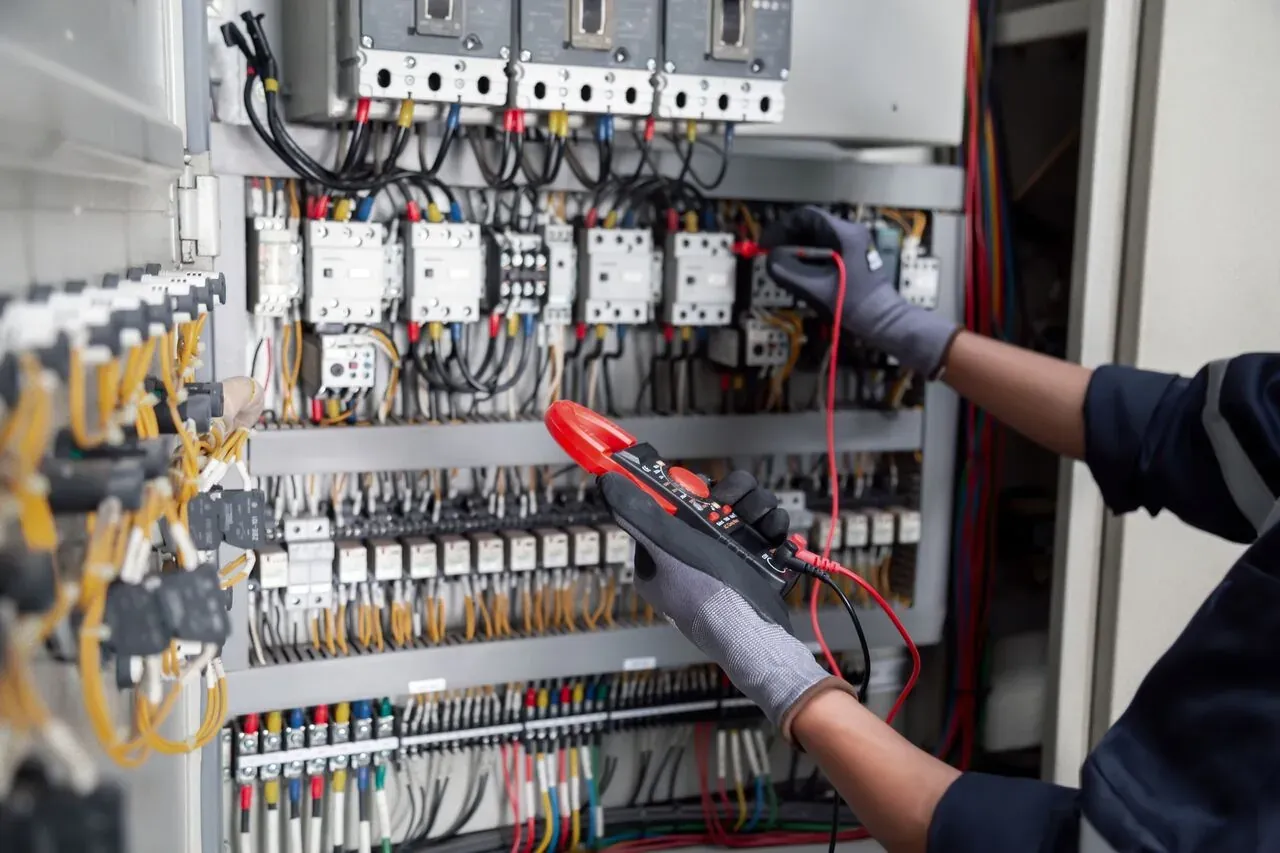
A Houston homeowner wants an EV charger in the garage. Three electricians, three numbers: $650, $1,400, and $2,900. All three look at the same garage wall. Nobody is lying, exactly. They are pricing three different jobs, and only one of them knows it.
That gap is the single most important thing a homeowner can understand before hiring an electrician. the number matters less than what the number covers. Everything else in this article is a variation on that theme.
A Quote Is a Guess-An Estimate Is a Document
A price delivered by text message, phone call, or a confident nod in the driveway is a guess. Maybe an educated one. It carries no scope, no exclusions, and no accountability when the real job turns out different.
A genuine estimate is written and itemized. It separates labor from materials, names the equipment (a 200-amp panel from a named manufacturer, 6 AWG copper for the charger run, a specific breaker type), lists permit fees, and says what happens if the crew opens a wall and finds something ugly. It also lists exclusions: drywall patching, painting, trenching, utility coordination.
The exclusions are where cheap bids hide. The $650 EV charger bid in the example above assumed the panel had spare capacity and the run was under 20 feet. The $2,900 bid assumed a load calculation might force a service upgrade. Same wall, different assumptions, and only the second contractor wrote theirs down.
This is the entire reason professional electrical estimating exists as a discipline. Estimators do takeoffs counting every device, measuring every foot of wire, pricing every fitting, and attaching labor hours to each. Homeowners do not need to run a takeoff themselves. They do need to demand that someone did.

The License Is the Floor, and Most People Never Check It
Texas licenses electricians through the Texas Department of Licensing and Regulation (TDLR), and the license ladder matters. Apprentices work under supervision. Journeyman electricians can work independently within limits. Master electricians can pull permits and run an electrical contracting business. An electrical contractor license is held by the company, and it requires a licensed master electrician and proof of insurance behind it.
Here is the cynical part: the person who shows up at the door is often not the person whose license is on the business card. That can be perfectly legal when a licensed master is supervising. It is also a common cover story for unlicensed side work.
The check takes about three minutes. TDLR runs a public license search online. A homeowner types in the license number from the estimate, confirms the name, the license type, and that it is active, and moves on. A contractor who dodges the question “What’s your TDLR license number?” has answered a different, more useful question.
Insurance deserves the same scrutiny. Ask for a certificate of insurance, and ask for it to be sent by the insurer or agent, not forwarded by the contractor from a screenshot. A fire traced to bad wiring is not the moment to learn the policy lapsed in March.
Permits Are Not Red Tape. They Are the Receipt
Permit rules in Texas vary by city. Houston, Dallas, Austin, San Antonio, and the suburbs around them each run their own permitting offices, fee schedules, and inspection practices, and some rural areas have little oversight at all. That variation produces a predictable sales pitch: “We can skip the permit and save you a few hundred bucks.”
Run the math on that savings. A typical residential permit might cost a couple hundred dollars. Unpermitted work can surface at the worst possible time: during a home sale when the buyer’s inspector flags a panel swap with no inspection record, or during an insurance claim when the adjuster asks for documentation that does not exist. Fixing it later can mean opening walls, paying for retroactive permits, and sometimes paying penalty fees, all with a buyer’s closing date ticking.
A permitted job gets a second set of eyes. The city inspector checks grounding, breaker sizing, wire gauge, and clearances. For the price of a permit, that is the cheapest independent inspection a homeowner will ever buy.
The contractor should pull the permit in their own name and say so in writing. A contractor who suggests the homeowner pull it “to keep things simple” is shifting liability onto the person least equipped to carry it.

The Panel Is the Plot Twist
Nearly every expensive surprise in residential electrical work starts at the panel. Homes built in the 1970s and 1980s across Texas were often wired for a world with one window AC unit, a TV, and a toaster. Today’s household adds a heat pump or a 4-ton central AC, an electric range, an EV charger, a pool pump, and a home office running all day.
Before any of those go in, someone has to perform a load calculation: a methodical tally of what the service can handle under National Electrical Code rules. Texas has adopted a recent edition of the NEC statewide for licensed electricians, and the calculation follows that code. If the math says a 100-amp service cannot carry the new load, the job quietly becomes a service upgrade, which can run into the thousands of dollars and may involve coordinating with the utility to disconnect and reconnect power.
A contractor who prices an EV charger or a new AC condenser without asking to see the panel, or without mentioning load, is pricing the easy version of the job. The hard version arrives as a change order.
While the panel cover is off, a competent electrician should also check its brand. Federal Pacific Electric and Zinsco panels, both installed widely in mid-century homes, have long-standing reputations for breakers that fail to trip under overload. A homeowner who hears “it’s fine, it’s been working” about one of these has heard a non-answer.
Texas Has Its Own Weird Variables
Attic temperatures regularly climb well above 120 degrees in summer. Wiring and fixtures installed in attics need the right temperature ratings, and recessed lights buried in insulation need to be rated for it. Ask what the materials are rated for, not just what they cost.
After Winter Storm Uri in 2021 left millions of Texans without power, generator and battery installations surged. A portable generator hooked up through a backfeed cable is dangerous to utility workers and the household. A properly installed transfer switch or interlock, permitted and inspected, is the legitimate version. The price difference between the two is the price of doing it right.
Pool bonding, GFCI protection, and outdoor circuits are code-heavy and unforgiving. This is not where to save money with whoever has the lowest hourly rate.
Meter bases, weatherheads, and service masts take punishment in coastal and Hill Country storms. An estimate that includes service upgrades should specify who handles the utility side, because the utility, not the electrician, controls when power gets reconnected.
How to Compare Three Bids Without Getting Played
Getting multiple bids is standard advice. Comparing them correctly is where homeowners stall. A few moves make the difference:
- Hand every contractor the same scope. Write one paragraph describing the job and send it to all three. Bids for “a charger” and bids for “a Level 2 charger on a dedicated 50-amp circuit, 25 feet from the panel, with a load calculation” are not comparable.
- Line up the exclusions. The cheapest bid that excludes permits, patching, and the load calculation is not the cheapest bid. It is the most incomplete one.
- Ask about change orders. Every contractor will say surprises happen. The good ones will tell the homeowner in advance how surprises get priced, and require written approval before extra work starts.
- Treat extreme outliers as information. A bid half the others’ size usually means a missed scope item or a corner about to be cut. A bid double the others’ usually means padding, or the only estimator who actually read the job.
Red Flags That Cost Real Money
- Pressure to sign today for a “discount” that mysteriously vanishes tomorrow.
- A deposit request approaching half the job before any materials are ordered. A modest deposit tied to material purchases is normal. Funding the contractor’s last job with the homeowner’s money is not.
- Cash-only terms, particularly paired with no permit needed.
- A flat per-outlet or per-fixture price quoted without seeing the house. Wiring a new outlet in an open garage and wiring one in a finished two-story wall are different jobs.
- No written scope, no license number, no insurance certificate. Any one is a yellow flag. Two is a decision.
One more protection worth asking about: lien waivers. In Texas, unpaid subcontractors and suppliers can potentially file liens against a property even when the homeowner paid the general contractor in full. At final payment, a homeowner should request a signed release confirming that materials and labor are paid. A homeowner unsure how that works can ask a real estate attorney before the final check goes out.
The Bottom Line
The cheapest electrician is rarely the cheapest outcome. The cost of electrical work lives in the details: the license behind the work, the permit that records it, the panel that has to carry it, and the exclusions nobody mentioned until the invoice. Homeowners who ask for an itemized, written estimate before hiring tend to discover the true price of a job while there is still time to choose. Homeowners who skip that step discover it later, at a higher rate.
Producing that itemized estimate, with real quantities, real material pricing, and labor tied to the work, is exactly what electrical estimating services are built to do. Texas Estimate exists to make the number on the page match the job in the wall.