
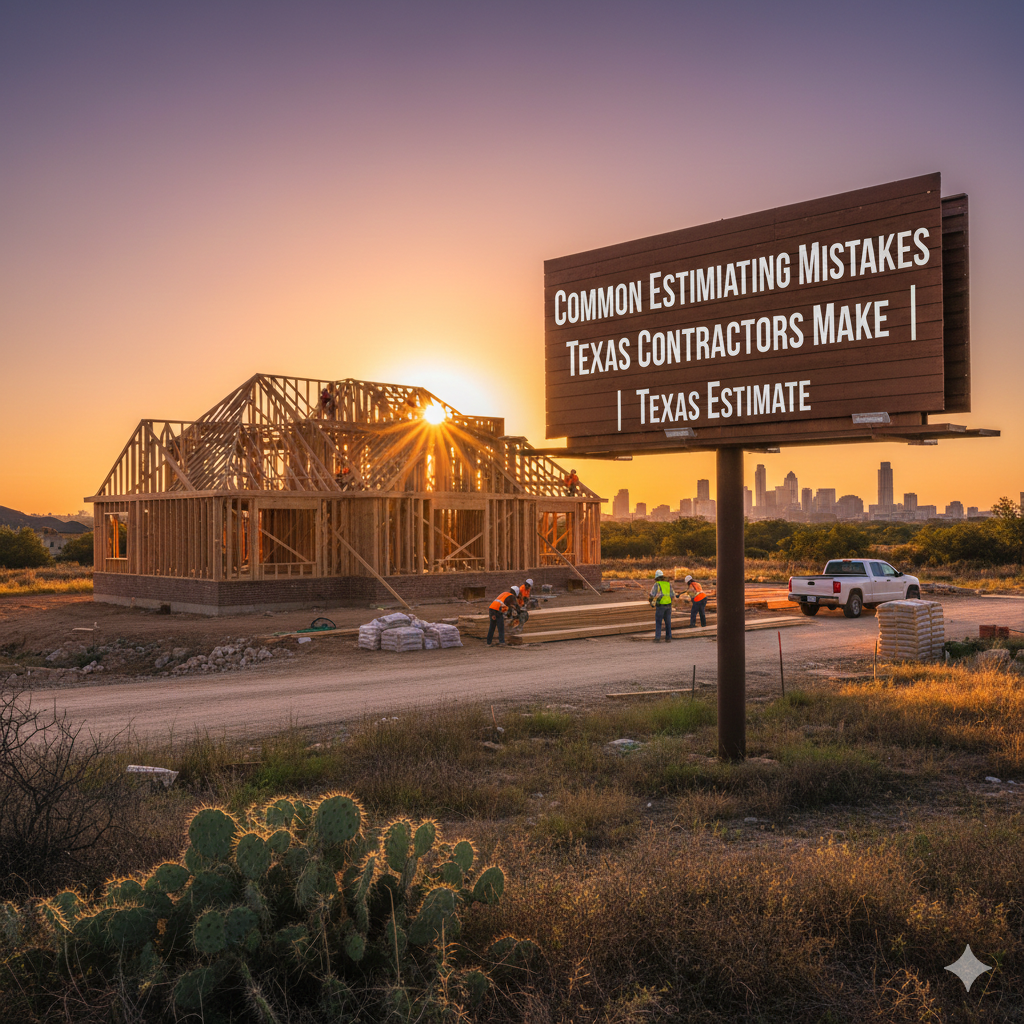
For Texas contractors, accurate construction estimating is the backbone of every successful project. Whether building residential homes in Austin, commercial offices in Dallas-Fort Worth, or industrial facilities in Houston, precise cost forecasting ensures that projects remain within budget, on schedule, and profitable.
Estimating involves more than just calculating material costs—it requires considering labor, equipment, permits, regional pricing variations, and potential delays unique to Texas construction markets. Accurate estimates help contractors secure competitive bids, maintain client trust, and reduce financial risks, especially in a state like Texas where construction demand is high and costs can fluctuate rapidly across cities.
How Estimating Mistakes Can Impact Projects Across Texas
Mistakes in construction estimating can have serious consequences for Texas contractors. Underestimating material costs, overlooking labor variations, or failing to account for city-specific regulations can lead to budget overruns, project delays, and lower profit margins. For example, a residential project in Austin may encounter higher labor costs due to a tight workforce, while commercial projects in Houston could be affected by rising material prices or permitting delays.
Common errors can also affect a contractor’s reputation. Clients expect reliable bids and accurate cost projections, and repeated estimating mistakes can erode trust, reduce repeat business, and harm long-term growth in the Texas market.
By understanding why accurate estimating is critical and recognizing the potential pitfalls unique to Texas, contractors can take proactive steps to avoid costly mistakes and ensure every project is executed efficiently.
Top Estimating Mistakes Texas Contractors Make
Underestimating Material Costs in Texas Construction Projects
One of the most common mistakes Texas contractors make is underestimating material costs. Prices for essential construction materials like lumber, concrete, steel, and roofing can vary significantly across Texas, especially in fast-growing cities like Austin, Dallas-Fort Worth, and Houston. Failing to account for these fluctuations can lead to budget overruns, project delays, and disputes with clients. Using Texas-specific cost databases and regularly updating material pricing is crucial to avoid this mistake.
Ignoring Labor Cost Variations Across Texas Cities
Labor costs in Texas are not uniform. Contractors who ignore regional labor rate differences risk underbudgeting for projects. For instance, wages for skilled trades in Austin or Dallas may be higher due to demand, whereas smaller cities like El Paso or Lubbock may have lower rates. Miscalculating labor costs can affect not only the budget but also project timelines, as insufficient labor planning may cause delays. Contractors should always incorporate city-specific labor rates when estimating.
Failing to Account for Local Permits and Regulatory Fees in Texas
Each Texas city or county has its own building codes, permit requirements, and inspection fees. Contractors often underestimate the time and cost required to secure permits, especially in cities like Houston, San Antonio, or Dallas with stricter regulations. This oversight can result in unexpected expenses, fines, or project delays. Accurate estimating requires a thorough understanding of local regulations and associated fees.
Overlooking Equipment and Subcontractor Costs in Texas Projects
Contractors sometimes forget to include equipment rental, transportation, and subcontractor costs in their estimates. For larger projects in Texas, this oversight can lead to significant financial gaps. Subcontractor rates can also vary by region and specialty—for example, electrical, plumbing, or HVAC services may cost more in high-demand Texas cities. Including all equipment and subcontractor costs upfront ensures that the budget reflects actual project requirements.
Neglecting Contingency Planning for Unexpected Expenses in Texas
Unexpected expenses are inevitable in construction, from material shortages to weather delays in Texas. Contractors who fail to include a contingency buffer risk cost overruns and project delays. A common practice is to allocate 5–10% of the total project cost as a contingency fund to cover unforeseen events. Proper contingency planning is especially important in Texas, where weather conditions and supply chain issues can be unpredictable.
Residential Construction Estimating Mistakes in Texas
Common Cost Overruns in Texas Home Construction Projects
One of the most frequent challenges Texas contractors face is cost overruns on residential construction projects. Rapid population growth in cities like Austin, Dallas-Fort Worth, and Houston has increased demand for housing, which in turn drives up labor and material costs. Contractors often underestimate expenses for foundations, roofing, and finishes, leading to budget gaps that can delay project completion or reduce profitability. For homeowners and builders alike, these overruns create unnecessary stress and can strain contractor-client relationships.
Miscalculating Cost per Square Foot in Texas Residential Builds
Accurately estimating cost per square foot is critical for budgeting and bidding on residential construction projects in Texas. Many contractors make the mistake of using generic averages that do not reflect regional variations in labor rates, material costs, or city-specific regulations. For instance, building a custom home in Austin may cost significantly more per square foot than in Lubbock due to labor shortages and higher local material prices. Miscalculating this figure can result in underpricing projects or losing profitability, making precise, Texas-specific data essential.
Failing to Include Local Material Price Fluctuations in Texas
Material prices in Texas can fluctuate widely depending on the region, supplier, and market conditions. Lumber, concrete, steel, and finishing materials often experience price swings influenced by supply chain disruptions, inflation, and seasonal demand. Contractors who fail to account for these fluctuations risk submitting inaccurate bids or exceeding budgets mid-project. Incorporating up-to-date local material prices into estimates ensures that residential projects stay on budget and reduces the risk of disputes with homeowners or clients.
By understanding and avoiding these common residential estimating mistakes, Texas contractors can produce more accurate bids, manage budgets effectively, and complete projects on time, while maintaining a strong reputation in the competitive Texas housing market.

Commercial Construction Estimating Mistakes in Texas
Errors in Estimating Office, Retail, and Industrial Projects in Texas
Commercial construction projects in Texas, whether they involve office buildings, retail spaces, or industrial facilities, require precise cost estimation to ensure profitability. Many contractors make the mistake of underestimating the overall project costs, often focusing only on materials and basic labor while neglecting specialized requirements like electrical, HVAC, or structural components. These oversights can result in budget overruns, project delays, and strained client relationships.
For example, constructing a warehouse in Dallas-Fort Worth might seem straightforward, but failing to account for high-demand labor rates or specialized equipment needs can significantly increase the final cost. Similarly, retail or office projects in Austin or Houston may require additional finishes or infrastructure upgrades, which are often overlooked during initial estimates.
Overlooking City-Specific Regulations and Zoning Costs in Texas
Another common mistake Texas contractors make is ignoring local building codes, zoning regulations, and permit costs. Each city in Texas—be it Houston, San Antonio, Dallas, or smaller cities like Lubbock or El Paso—has specific rules that can affect construction timelines and costs.
For instance, zoning restrictions may dictate the type of construction allowed, setbacks, or parking requirements, while permit fees vary by municipality. Failing to include these in your estimates can result in unexpected expenses, fines, or project delays, impacting both budget and schedule. Contractors who overlook these factors often lose profitability and face challenges in client satisfaction.
Ignoring Regional Material and Labor Trends in Texas Commercial Builds
Texas is a large state with significant regional differences in material costs and labor availability. Many contractors make the mistake of applying a one-size-fits-all estimate across multiple Texas cities. For example, concrete, steel, and lumber costs may be higher in high-growth areas like Austin and Dallas, while labor shortages can drive wages up in Houston’s booming construction market.
Ignoring these regional variations can lead to underestimating total project costs or overcommitting resources. Successful Texas contractors must stay updated on local material price trends, labor availability, and regional economic factors to produce accurate estimates. Using tools like Texas Estimate’s localized cost data ensures that commercial project estimates are realistic, reducing risk and enhancing project efficiency.
How to Avoid Estimating Mistakes in Texas Construction Projects
Using Accurate Texas-Specific Cost Data for Estimating
One of the most common mistakes Texas contractors make is relying on generic national cost data rather than Texas-specific material and labor rates. Prices for materials such as lumber, concrete, steel, and HVAC components can vary significantly between cities like Austin, Houston, Dallas-Fort Worth, and San Antonio.
By using accurate local cost data, contractors can create precise estimates that reflect regional market conditions, ensuring projects stay within budget. For example, accounting for city-specific labor rates and delivery costs helps prevent unexpected overruns and improves the accuracy of bids for residential, commercial, or industrial construction projects in Texas.
Leveraging Construction Estimating Software for Texas Contractors
Another effective way to avoid estimating errors is by using construction estimating software tailored for Texas projects. Modern software allows contractors to:
- Automate takeoffs and calculations, reducing human error
- Integrate Texas-specific material and labor costs
- Manage multiple projects simultaneously
- Generate detailed cost reports for clients and stakeholders
For Texas contractors, leveraging software ensures that every project estimate is accurate, professional, and competitive, minimizing costly mistakes and improving client confidence.
Proper Planning for Labor, Materials, and Contingencies in Texas
Even with accurate data and software, many contractors underestimate labor availability, material fluctuations, and unforeseen project challenges. To avoid these mistakes:
- Plan labor schedules carefully, accounting for shortages in high-demand trades like electricians, framers, and plumbers in Texas.
- Monitor material costs closely, especially volatile commodities such as lumber, concrete, and steel, which can fluctuate by region.
- Include contingency allowances for delays, permit issues, or unexpected site conditions common in Texas construction projects.
Proper planning ensures that Texas contractors can deliver projects on time, within budget, and without compromising quality, even in a market with rising material and labor costs.
Using these strategies—Texas-specific cost data, estimating software, and thorough planning—helps contractors avoid the most common estimating mistakes, saving money, reducing stress, and enhancing their reputation across Texas construction markets.

Benefits of Accurate Estimating for Texas Contractors
Reducing Cost Overruns and Budget Surprises in Texas Projects
For Texas contractors, accurate estimating is the cornerstone of successful construction projects. By properly accounting for material costs, labor rates, equipment, and regional variations, contractors can avoid common pitfalls that lead to budget overruns. Cities like Austin, Dallas-Fort Worth, Houston, and San Antonio experience fluctuating labor and material costs, making precise cost forecasting essential.
Accurate estimates allow contractors to prepare for unforeseen expenses, such as supply chain delays, price increases for steel, lumber, or concrete, and local permit fees. This proactive approach ensures that projects stay within budget, helping Texas contractors complete projects efficiently while maintaining profitability.
Improving Project Scheduling and Efficiency Across Texas
Construction in Texas often involves tight schedules and multiple simultaneous projects, from residential developments in suburbs to commercial builds in urban centers. Accurate estimating enables contractors to allocate resources effectively, schedule labor efficiently, and plan deliveries on time.
For example, knowing the precise cost and quantity of materials helps contractors avoid delays caused by shortages or last-minute ordering. Similarly, accurate labor cost estimation allows project managers to assign crews optimally across multiple sites, ensuring timely project completion. This improves overall workflow efficiency and minimizes downtime, which is crucial in competitive markets like Houston and Dallas-Fort Worth.
Enhancing Contractor Reputation and Client Satisfaction in Texas
A contractor’s reputation in Texas depends heavily on delivering projects on time and within budget. Accurate estimating demonstrates professionalism and reliability, instilling confidence in clients and stakeholders. Avoiding common estimating mistakes helps contractors build trust with homeowners, commercial clients, and investors, which can lead to repeat business and referrals.
Moreover, precise cost estimates allow contractors to set realistic expectations with clients, preventing misunderstandings and disputes over pricing. This not only enhances client satisfaction but also strengthens the contractor’s standing in the Texas construction market. A solid reputation for accurate estimating can be a key differentiator in highly competitive areas like Austin, Houston, and Dallas, where clients expect both quality and financial transparency.
By focusing on accurate estimating, Texas contractors can minimize financial risks, improve project timelines, and boost client trust, positioning themselves for long-term success in a rapidly growing and competitive construction market.
Conclusion
In the fast-paced Texas construction industry, even minor errors in cost estimating can lead to significant budget overruns, project delays, and reduced profitability. Some of the most common mistakes Texas contractors make include underestimating material costs, failing to account for labor variations across cities, overlooking local permits and regulatory fees, and ignoring contingencies for unexpected expenses.
For residential projects, miscalculating cost per square foot, failing to track regional material price fluctuations, and neglecting subcontractor fees are frequent issues. In commercial construction, mistakes often arise from underestimating costs for office, retail, or industrial projects, overlooking city-specific regulations, and ignoring regional labor and material trends.
These mistakes not only impact project budgets but can also damage contractor reputations and reduce client trust. In a competitive Texas construction market, accurate estimating is essential to deliver projects on time, on budget, and with high quality.
How Texas Estimate Helps Contractors Avoid Costly Errors
At Texas Estimate, we provide Texas-specific construction estimating solutions that help contractors minimize errors and improve project outcomes. Our services include:
Accurate Local Cost Data
We provide up-to-date material, labor, and equipment cost data for major Texas cities, including Austin, Dallas-Fort Worth, Houston, San Antonio, and El Paso, ensuring estimates reflect real market conditions.
Detailed Construction Takeoffs
By providing precise takeoffs for both residential and commercial projects, contractors can avoid miscalculations in material quantities and reduce waste.
Estimating Software Recommendations
We guide contractors on using construction estimating software tailored for Texas projects, which helps streamline calculations, track costs, and improve accuracy.
Contingency Planning and Risk Assessment
Our guidance includes planning for unexpected costs, such as price fluctuations in materials, labor shortages, or regulatory changes, helping contractors stay prepared for any scenario.
Expert Tips for Efficient Project Budgeting
We share best practices for managing costs, scheduling projects, and allocating resources efficiently, so Texas contractors can maximize profitability and client satisfaction.
By leveraging Texas Estimate, contractors in Texas can confidently avoid common estimating mistakes, reduce financial risk, and ensure successful project completion every time.